
Dave Lebling

Dave Lebling is a computer scientist and game designer best known as a co-creator of Zork and a co-founder of Infocom, the Cambridge company that pioneered commercial interactive fiction. A member of the MIT Laboratory for Computer Science, he co-wrote Zork beginning in 1977 with Marc Blank, Tim Anderson, and Bruce Daniels, and in 1979 became one of the founders of Infocom to commercialize the game. He went on to write seven other highly regarded text adventure games and co-founded one of the pioneering businesses in computer gaming before Infocom was acquired by Activision. His work helped establish interactive narrative as a distinct form of digital expression and MIT's Laboratory for Computer Science as a creative as well as technical environment.
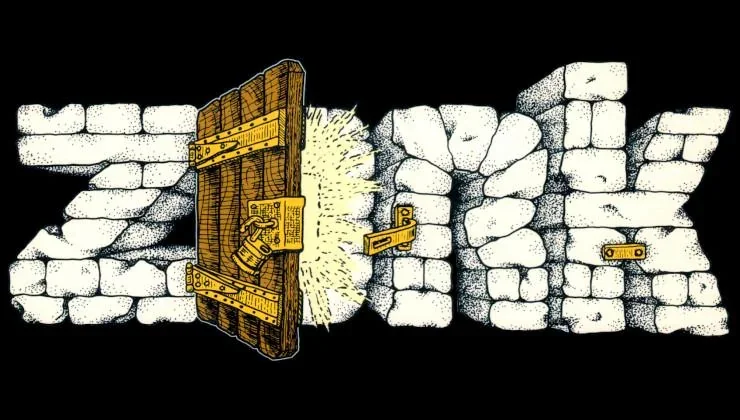
Dave Lebling: A Written Oral History
While the Tech Pioneers Oral History Project primarily features recorded, face-to-face video interviews, computer scientist and Infocom co-founder Dave Lebling contributed his recollections through a comprehensive series of written responses.
In August 2025, rather than participating in an in-person, recorded conversation, Lebling engaged deeply with the museum’s core thematic and innovation questions, compiling his thoughts and reflections.
His written testimony preserves his unique voice, technical precision, and dry humor, providing a detailed, first-hand account of the creation of Zork and the early days of interactive fiction. This written record serves as an invaluable primary source within the Museum’s permanent research archive, demonstrating that the preservation of tech history can take many essential forms.
Guiding Questions and Answers (P. David Lebling, 8-21-25)
When you came to MIT, was it what you expected? What had you known about the school, and what kind of environment was Cambridge at that time?
I was born in 1949 in Washington, DC, and I came to MIT in Fall of 1967. I had looked at one other college (Georgetown University in DC) and had friends who were interested in Dartmouth, but I was set on MIT, even though I had never visited it. I knew nothing about how colleges operated. I had seen TV shows that had bits about college. I was interviewed by a local MIT alumnus who seemed to approve of me. I wrote an essay which I’ve forgotten but apparently was acceptable.
More importantly, I had read Robert A. Heinlein’s novel “Have Spacesuit, Will Travel.” The hero wanted to get into MIT. He entered a lottery where victory would take you to the Moon. He doesn’t win first prize but does win a cast-off space suit which he refurbishes. Aliens hear his radio. He helps save an alien and ends up as Earth’s example of a typical Earthling.
Beyond that, all I knew was that MIT was a good school with high standing and lots of math and science. I got in!
Cambridge itself was pretty grungy. The MIT campus had a mix of old dorms and new ones. Students were segregated; men (the vast majority, about 840) and women (about 50). Dorm rooms were mixed from freshmen to seniors, and somewhat overcrowded. All women were in McCormick Hall, which was considered a palace.
I honestly didn’t visit outside Cambridge very often after coming up. I “tooled” instead.
Did your path to your future career start with gaming, or with an interest in tech?
Both. I had a group of friends who played board games such as Diplomacy and Risk, along with Avalon Hill war games such as Gettysburg and Panzer. We even tried the famous Naval War Game invented by Fletcher Pratt. It was played on the floor and “moves” were tape measured.
My interest in tech came later, when I got to MIT and found computers. (Although I had been a science fiction fan for years.)
How did Zork come into being?
Will Crowther at BBN wrote a computer game (in Fortran) that was the harbinger of Zork. It allowed players to type commands, find the responses, and find out the outcome. Most of the game was about exploring a cave, looking for treasure and avoiding trouble. The layout was a real cave in Kentucky called Bedquilt Cave.
Don Woods, who was at Stanford, decided to spice up and improve “Colossal Cave Adventure” by adding more puzzles, prizes (gold, diamonds, etc.) and more danger.
It has been accurately said that all work on the ARPANET stopped for a week while “Adventure” spread through all available hardware while people tried to solve it.
So that’s the start, but Zork was not there yet. Four people at the Laboratory for Computer Science (LCS) got a copy of Adventure and solved it: me, Marc Blank, Tim Anderson, and Bruce Daniels.
After a while, we concluded that all of Adventure had been conquered, including the “One Lousy Point,” so why not create a game of our own?
The Dynamic Modeling Group (part of LCS) did most of its work in Muddle, a descendant of Lisp built in our lab. Using Muddle was natural for all of us. We all agreed the game would be written in Muddle. Things were quiet for a time, and we hemmed and hawed for a while.
(Muddle later was officially renamed “MDL,” which was more “sanitized.” There were many versions of what “MDL” meant, and many people made up their own. One I liked was “Model Development Language,” but “More Datatypes than Lisp” wasn’t bad.)
My initial contribution to my fellow authors was to put together a very tiny and generally awful Adventure-like game. Then I took my 1977 summer vacation and forgot about Zork entirely for a few weeks. When I returned, Marc, Tim, and Bruce had created, tested and proudly demonstrated an actual game. I was honored to be the first player of Zork. Of course, I jumped in and added more puzzles, dangers, etc. The rest is history.
When you were developing Zork, what kinds of hardware did you use? Software? Were you mostly using existing products, or did you have to create your own infrastructure?
Almost every piece of hardware was from DEC (Digital Equipment Corportation). Every early development of Zork was written on a DEC machine. There were also machines called Imlacs, based on Route 128. They were somewhat like today’s desktops, except that the desktops were about 4 feet wide by 2 feet deep by 3 feet high. Electronics were below the desk, which also had controls (switches in some cases) on the table. Finally, there was a monitor with green lines on a dark screen. The lines could draw any straight line at any angle. With that you could draw anything from architectural diagrams to the tiny letters making up our alphabet.
What was your first meaningful encounter with computers or software that made you think: this changes everything, particularly for the way people interact and especially while gaming?
My first actual encounter with a computer was when I was shown around in the computer building (along with many other freshmen). That was where I encountered Eliza and saw the first Space War game. Both were exciting.
Eliza was a game that was “smart” and “human.” It actually convinced a lot of people that it was human. Space War was a playable game, in some versions with two players.
Programs like these “changed everything,” in that these games were not the size of giant IBM computers. Still large, but something an individual could work. No more overnight waits for a file of punch cards.
Why has gaming often been one of the drivers of innovation - even thinking about how a company like Nvidia originally made chips for gaming, now useful for AI?
Games in general have existed for generations. What the new type of gaming did was to try to beat the computer. As time went on, more complexity appeared, and games with multiple players, but the majority are still one player versus one computer. The desire for more realism and more NPC’s (or contrariwise, more real players as internet grew) constantly wanted to have more realism and power (literally and figuratively). Many popular games, such as The Last of Us, are good examples. MMO’s take a somewhat different approach but nonetheless use vast amounts of code.
Finally, I like to think that AI is an offshoot of games like Zork, where the idea was cleverness and realism, and the player asks questions and gets answers.
What made Greater Boston particularly fertile ground for tech entrepreneurship?
Boston and its environs had lots of available space, for starters. MIT was already available to set up companies. Digital Equipment Corporation (DEC) comes to mind first; it started out in a former woolen mill. Infocom moved into open space that was previously used for a public policy company. Open space next to MIT was available, and that was filled with MIT people who could walk back and forth from the main campus.
I have an anecdote. My grandfather, who lived near Washington, DC, thought Boston was an old, worn-out city with nothing going for it. He wondered why I wanted to go there. In a few months, he was reading up on computers.
What do you see as the role of public policy in creating the right conditions for innovation? What about universities like MIT? Talented individuals and networks?
Getting out of the way? More seriously, the “right conditions” are not unlike some in the US Constitution: freedom of thought, freedom to create, freedom to speak, and others. MIT is blessed to have collected a critical mass of interested students, unconstrained and unhindered. MIT has for a long time been more open, more willing to take intellectual risk, than many others. In addition, the Boston area contains an additional mass of colleges and universities that helps add some spice for the Institute. MIT has also created new businesses and attracted others companies all over Cambridge.
How does your perspective, from the earliest days of your career to now, give you insight into the current movement around AI and rapid technological advancement? What are you most excited for? Anxious about?
I am alternating between terror and hope. I am not sure where on that clock I am today.
For example, there are various AI “chats” which quickly produce answers to any question. This is wonderful! On the other hand, they also sometimes cheat. Ouch.
AI currently uses huge amounts of power and continues to grow, as does the material to make them.
Outside of tech and gaming, where do you look for great narrative storytelling? What’s the role of great storytellers in advancing innovation (Is there a SciFi to real-world tech pipeline?)
There is excellent SF out there still. (I prefer “SF” to “SciFi”.) The pipeline is still there. Some of it is nearly new, some a little older. Neal Stephenson is a good choice. Adrian Tchaikovsky is a mix between hard SF and Fantasy. I don’t think authors have truly gotten into AI yet. Of course, AI is young.
If you were starting all over again, knowing what you know now, what might you do differently? What advice might you have for a recent graduate entering the workforce?
What I know now is “expect the unexpected!” Who pre-guessed COVID? Who saw the chips that metamorphose into hugely powerful chips? Etc. My advice is to be flexible. When I was young a lot of employees assumed that they were going to do the same thing over and over until they retired. I’ve worked in a wide variety of companies. Infocom was only one of a great many, but lucky for me, almost all of these companies were new and different but still basically in the computer universe. Take advantage of what you know, figure out how to take advantage of useful things you know, and work from there.